How to Plan Group Airport Transfers for Your Team
Coordinating airport transfers for a business group involves synchronizing flight schedules, selecting the right-sized vehicles like Mercedes Sprinter vans or luxury SUVs, and establishing clear terminal meeting points. This strategic approach streamlines logistics, ensures team safety, and significantly reduces the per-person cost compared to booking multiple individual rides.

How can I manage staggered flight arrivals for a team?
One of the most complex challenges for any corporate travel manager is handling a group of employees arriving on different flights. If your team is flying into Philadelphia (PHL), Newark (EWR), or Atlantic City (ACY), it is rare that everyone lands at the exact same minute. The key to successfully coordinating airport transfers for a business group with staggered arrivals is the "buffer window" strategy.
Instead of booking a separate car for every person, group your travelers into clusters based on their scheduled arrival times. Typically, a 45-to-60-minute window is the sweet spot. Those who land first can use the time to catch up on emails or grab a coffee at the terminal, while the chauffeur monitors the remaining flights in that cluster. This reduces the number of vehicles required and ensures that no one is left waiting for hours.
Communication is the backbone of this strategy. When you book with a professional service, you should provide a manifest that includes every traveler’s flight number. At A-List Car Service, our dispatchers track these flights in real-time. If one flight is delayed while the others are on time, we can pivot—perhaps sending a smaller luxury SUV for the early arrivals and rescheduling a van for the delayed group. This flexibility is something you simply cannot get with standard rideshare apps.
What is the best vehicle for group airport transportation?
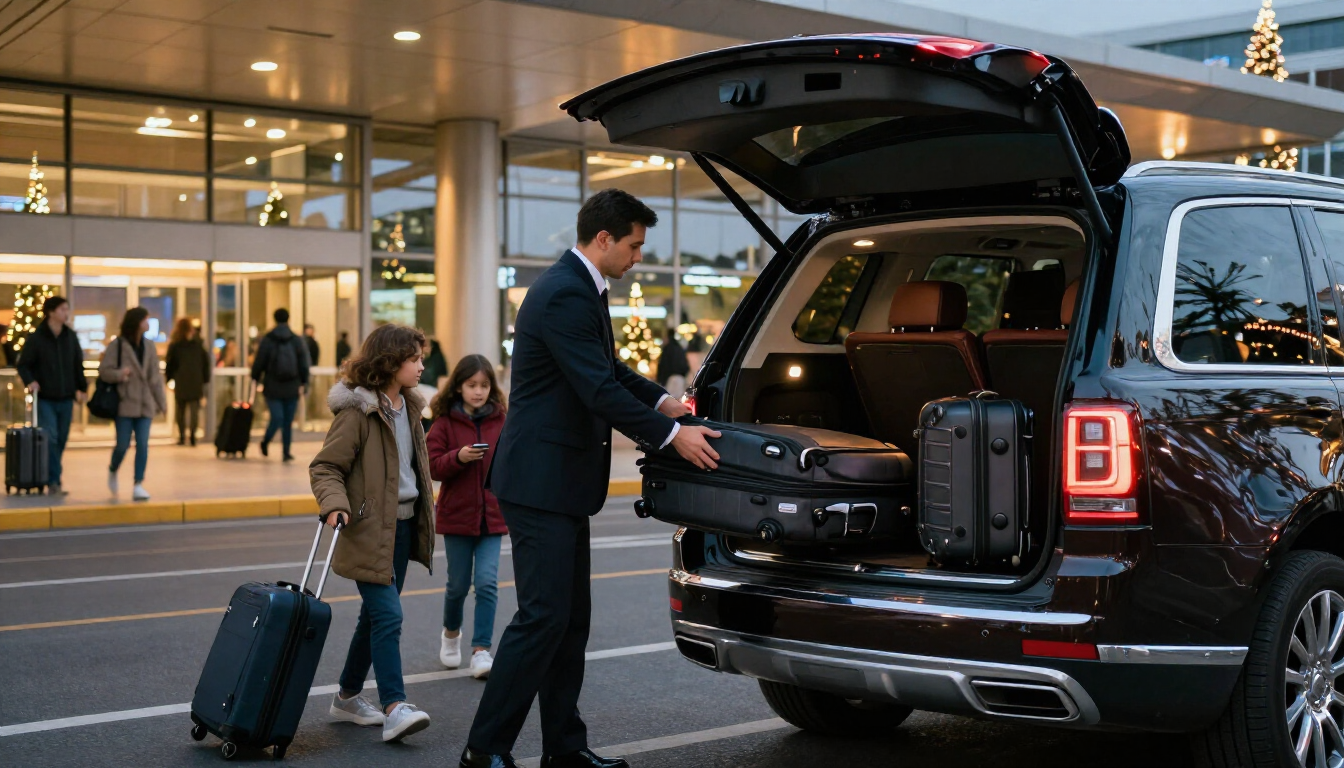
Choosing the right vehicle is about more than just seat counts; it’s about luggage capacity and passenger comfort. When you are coordinating airport transfers for a business group, you must account for the fact that business travelers often carry both a checked bag and a laptop bag.
For smaller executive teams of 3 to 5 people, our Cadillac XT5 or GMC Yukon XL offers a blend of sophistication and space. However, once a group hits the 6-person mark, moving into a Mercedes Sprinter or Ford Transit van becomes the most logical choice. These vehicles provide:
- Ample Headroom: Passengers can stand up and move to their seats comfortably.
- Dedicated Luggage Space: Separate compartments ensure bags aren't piled in the seating area.
- Connectivity: Many of our vans offer charging ports, allowing the team to stay productive during the drive to the Borgata or Hard Rock in Atlantic City.
- Professionalism: Arriving together in a high-end van makes a much stronger impression than a scattered line of disparate Uber vehicles.
Evaluating the "Duty of Care" is also vital. When you choose a professional limousine service , you are ensuring that every member of the team is in a vehicle that is commercially insured and driven by a background-checked, professional chauffeur. For a travel manager, this peace of mind is invaluable.

Where should my team gather at the airport terminal?
Nothing creates more stress for a group than wandering around a busy airport like JFK or EWR looking for their ride. To prevent this, you should establish a clear meeting protocol during the planning phase. There are two primary options for group pickups:
- Meet and Greet Service: This is the gold standard for business groups. A chauffeur waits at the bottom of the escalator in the baggage claim area holding a digital sign with your company name or a specific group code. This serves as a physical lighthouse for the team. As people land, they naturally gravitate toward the sign.
- Curbside Coordination: For teams that are highly experienced travelers and traveling light, a curbside pickup can be faster. In this scenario, the coordinator (or the lead traveler) stays in direct contact with the chauffeur. Once the final member of the cluster has their bags, the vehicle is called from the cell phone lot to a specific terminal pillar number.
Whichever method you choose, make sure the instructions are included in the calendar invite sent to the team. Providing the contact information for the car service directly to the travelers ensures that if someone gets lost, they can call for immediate assistance.
How do shared transfers lower business travel costs?
While a luxury van has a higher base price than a sedan, the math almost always favors the group vehicle for business travel. When you divide the cost of a Mercedes Sprinter by 10 or 12 passengers, the per-person rate is frequently lower than a mid-tier rideshare—and significantly lower than multiple individual black car bookings.
Beyond the raw numbers, there are "hidden" cost savings to consider:
- Reduced Expense Reports: Processing one invoice for a group transfer is much more efficient for the accounting department than auditing 12 separate receipts for individual rides.
- Productivity Gains: When a team travels together, they can conduct a quick briefing or debriefing during the ride, turning transit time into billable or productive time.
- Parking and Tolls: One vehicle means one set of tolls and one drop-off fee, rather than compounding those costs across a fleet of smaller cars.
Essential Logistics Checklist for Travel Managers
To ensure your next group trip goes off without a hitch, use this checklist during the planning process:
- Confirm Luggage Counts: Ask participants if they are bringing oversized items (like trade show displays or golf clubs).
- Set a "Wheels Up" Time: Clearly communicate when the van will depart the terminal, regardless of minor delays.
- Designate a Point Person: Ensure one person in the group has the chauffeur’s mobile number and the booking confirmation.
- Audit the Manifest: Double-check flight numbers and arrival terminals 24 hours before the trip.
- Plan the Return: Don't forget to coordinate the trip back to the airport, usually scheduled 2.5 to 3 hours before the first flight in the group departs.
Cost-Benefit Analysis of Shared Executive Travel
When evaluating the budget, consider the destination. If your team is heading to a casino resort in Atlantic City or a corporate headquarters in Philadelphia, the convenience of a door-to-door shared service outweighs the complexity of public transit or the unreliability of multiple individual bookings. A shared transfer fosters a sense of unity, ensuring the team arrives at the venue at the exact same time, ready to work. This synchronization is essential for high-stakes meetings or events where a late arrival from a key team member could derail the entire agenda.
Summary of Group Transfer Best Practices
Coordinating airport transfers for a business group is a strategic move that balances budget, efficiency, and executive comfort. By clustering arrivals into 60-minute windows, choosing high-capacity vehicles like the Mercedes Sprinter, and utilizing professional meet-and-greet services, travel managers can eliminate the chaos of airport logistics. Shared transportation not only lowers the per-person cost but also ensures a higher standard of safety and reliability for your team.
Key Takeaways for Your Next Trip:
- Right-size early: Match your vehicle to both passenger count and luggage volume.
- Centralize communication: Use a single car service provider to track all flights under one manifest.
- Prioritize productivity: Choose vehicles that allow for a mobile-office environment.
- Verify credentials: Ensure the service provider is fully insured and familiar with regional airport layouts.
If you're ready to streamline your next team event, about our team and our commitment to excellence, or reach out to contact us for a custom quote on your group's specific itinerary.