How to Plan Holiday Party Transportation
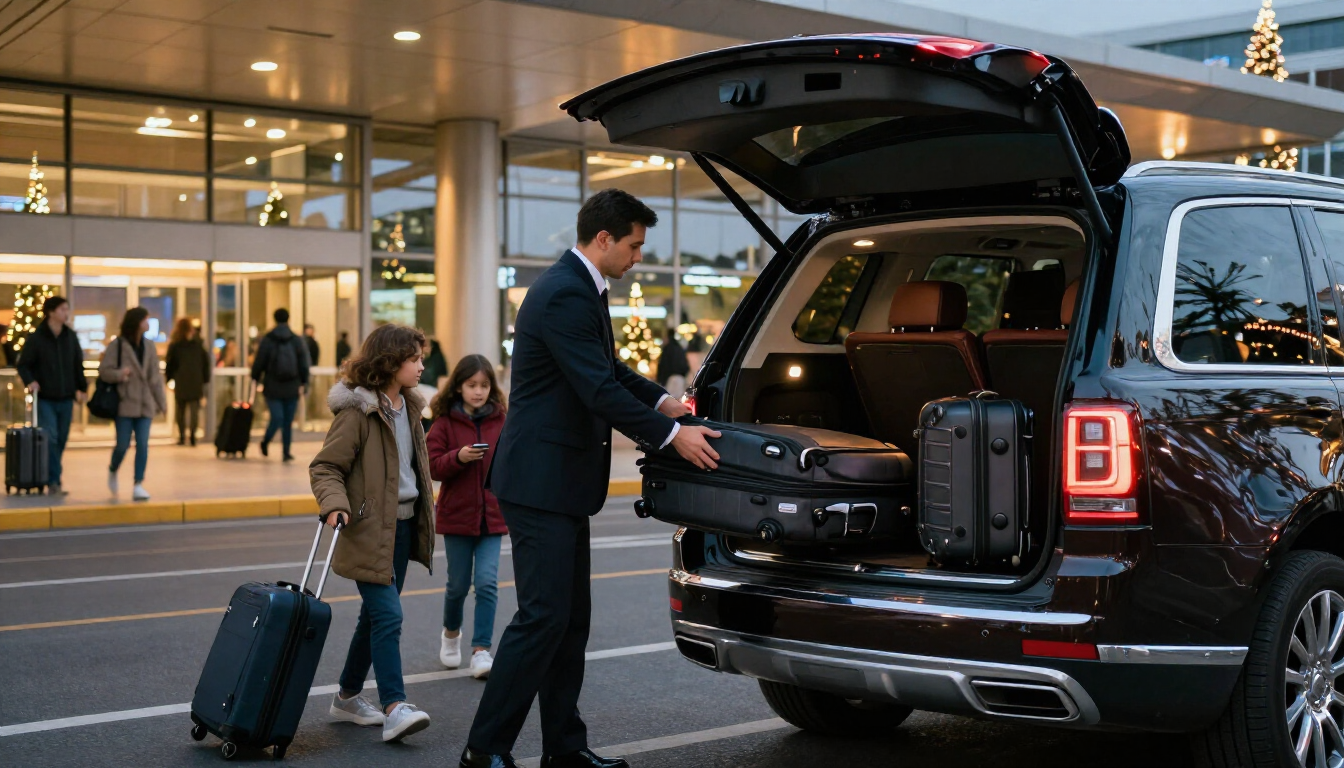
Company holiday party transportation should be planned as an event system, not a last-minute ride request. Start with the guest list, choose safe pickup hubs, schedule outbound and return shuttles, assign a transportation lead, and reserve professional vehicles early. This reduces confusion, protects employees, and helps the evening end smoothly.
Why should employers arrange holiday party transportation in advance?
A company holiday party often involves alcohol, winter weather, unfamiliar venues, and employees traveling at the same time. Waiting until the week of the event can leave you with fewer vehicle choices, limited availability, and no practical plan for getting everyone home.
Advance planning gives your company time to:
- Compare vehicle sizes and service options
- Coordinate pickup locations with employees
- Build realistic departure and return schedules
- Confirm accessibility, luggage, and special requests
- Reduce pressure on managers during the event
There is also a liability reason to plan carefully. Employers cannot control every decision an adult employee makes, but they can demonstrate responsible preparation by offering a clear, reliable transportation option. Professional chauffeured service does not eliminate every risk, but it can help reduce unsafe driving decisions and provide a documented plan for moving guests.
For a party in Atlantic City, Philadelphia, or nearby New Jersey communities, a transportation provider such as A-List Car Service can help coordinate vehicles, routes, and timing before the event date.
How do you choose the right group transportation plan?
Begin with the event details rather than the vehicle. Your transportation plan should reflect the number of guests, where they live, the venue, the party schedule, and if employees are expected to use the service both ways.
Collect these details first:
- Expected attendance, including guests or plus-ones
- Employee neighborhoods or preferred pickup areas
- Venue address, parking instructions, and entrance location
- Start time, dinner timing, entertainment, and closing time
- Whether anyone needs accessible boarding or additional space
Next, decide if employees should be collected from individual addresses or from shared pickup hubs. Individual pickups can be convenient, but they add time, cost, and route complexity. Shared hubs, such as the office, a central train station, or several large parking areas, usually make the schedule easier to manage.
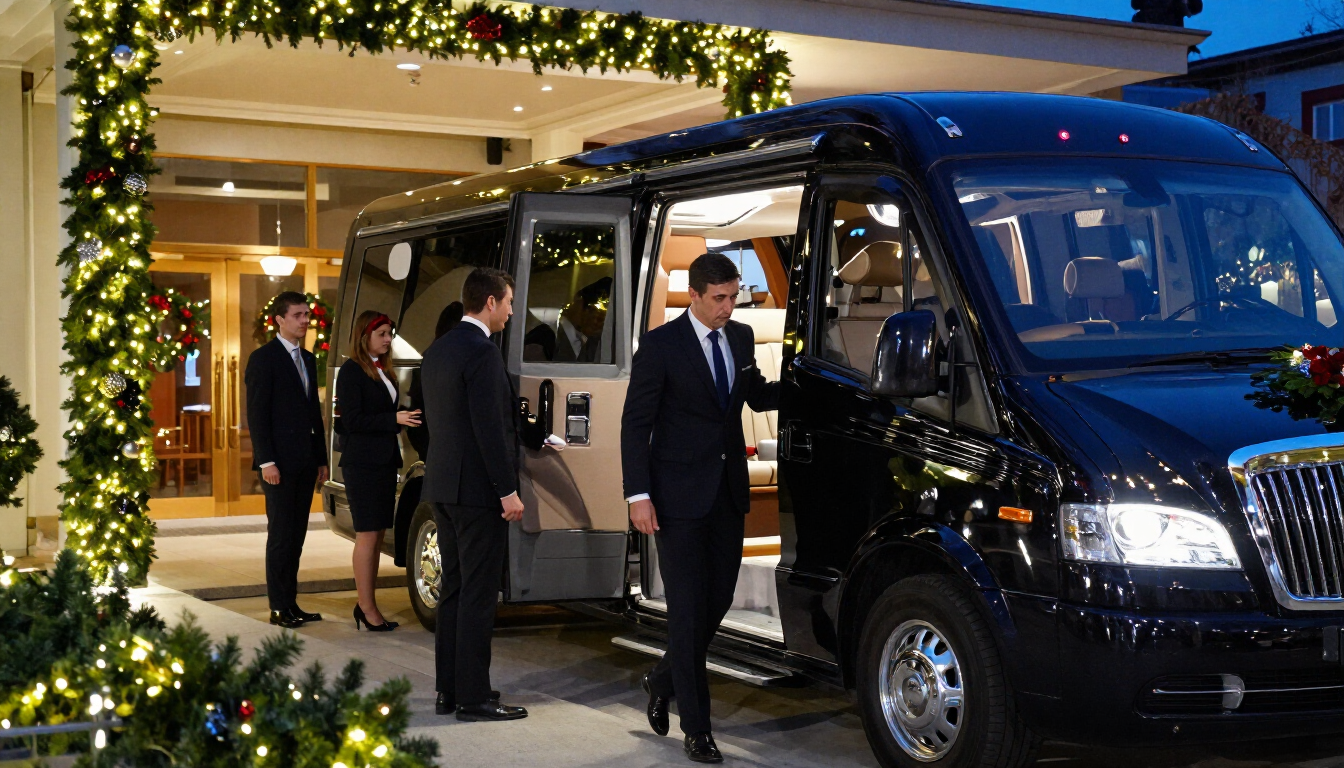
Review vehicle options through the provider’s fleet page . SUVs can work well for executives or small groups, while passenger vans and larger vehicles are better for teams traveling together. If the guest list is large, ask if multiple vehicles can operate on coordinated routes.
Shuttle scheduling that keeps the event on time
The best shuttle schedule is simple enough for employees to understand and flexible enough to handle ordinary delays. Avoid creating a plan that depends on every passenger arriving at exactly the same minute.
For the outbound trip, schedule each pickup window with enough time for boarding, traffic, and venue arrival. If the event begins at 7:00 p.m., do not plan the final passenger to arrive at 6:58. A practical schedule may target arrival 20 to 30 minutes before the formal start, especially if guests need to check in, walk through a large property, or take photos.
For each route, document:
- Vehicle name or number
- Driver contact process
- Pickup location and meeting instructions
- Arrival window
- Passenger list or headcount
- Transportation lead responsible for updates
Send the final schedule to employees at least several days before the party. Include a map pin, exact meeting point, what time to arrive, and what to do if someone is running late. Ask passengers to notify the transportation lead, not the driver directly, so communication stays organized.
Avoid overloading one vehicle simply because its listed capacity appears sufficient. Passengers need reasonable comfort, and bags, coats, mobility equipment, or winter clothing can affect practical capacity.
How should you handle multiple pickup points?
Multiple pickup points work best when they are grouped geographically. Start by mapping employee locations and looking for natural clusters. For example, a company may offer one route from Atlantic City, another from nearby shore communities, and a third from Philadelphia-area employees.
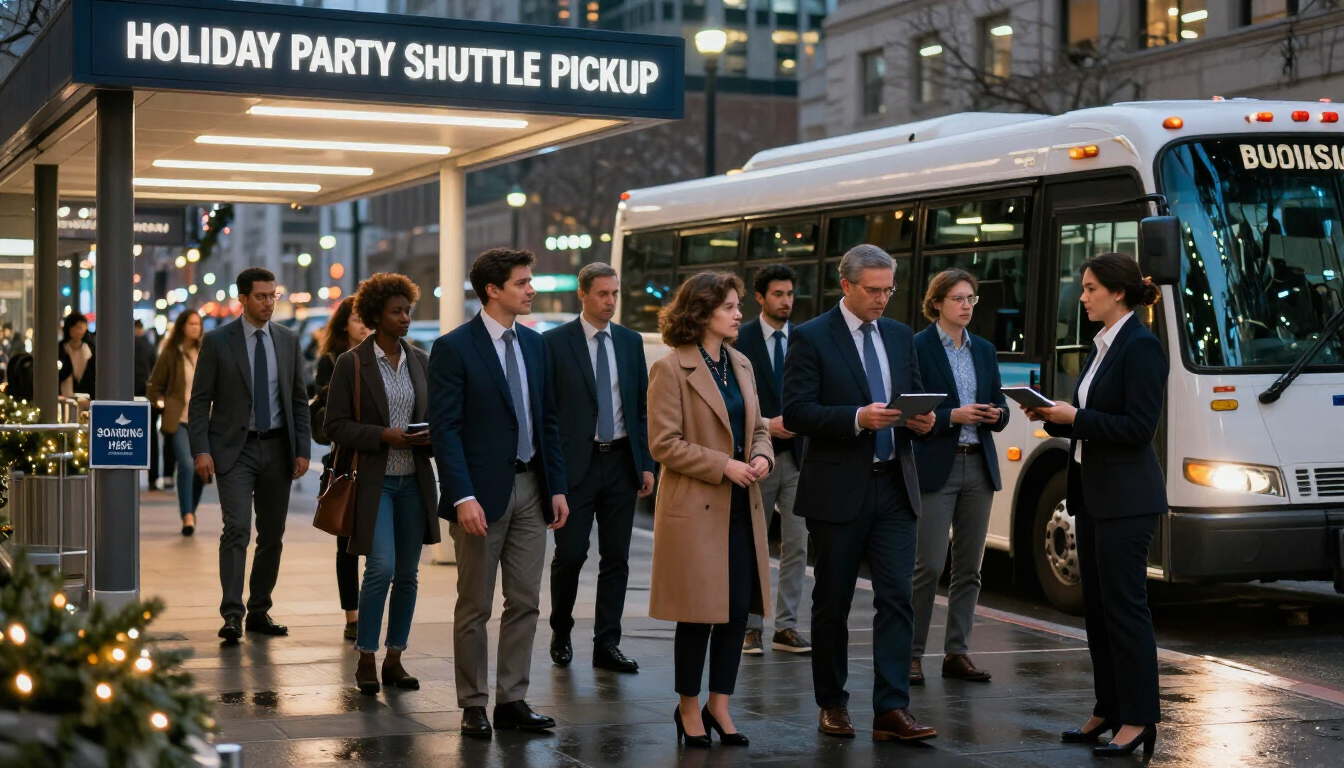
Keep the number of stops limited. Too many stops create a rolling delay that affects everyone onboard. A useful rule is to select pickup hubs that are easy to find, well lit, and safe for boarding. Office parking lots, hotels, and designated transit areas may be better than narrow residential streets or crowded retail entrances.
Share these instructions with every passenger:
- Exact address and landmark
- Side of the property where the vehicle will wait
- Required arrival time
- How the vehicle will be identified
- Who to call for urgent changes
If employees are traveling from Philadelphia, New York, or different parts of South Jersey, consider separate routes instead of one oversized loop. A shorter route generally creates a better guest experience and makes the return schedule more dependable.
Use the provider’s service areas information as a starting point, then confirm the exact addresses and travel times with the transportation company. Estimated drive times should account for Friday traffic, seasonal congestion, venue access, and weather.
Planning the end-of-night transportation
Return transportation deserves as much attention as the trip to the party. Guests may leave at different times, the venue may become crowded, and the transportation lead may be busy with final announcements or vendor payments.
Choose one of three basic return models:
- Fixed departure: Everyone leaves at a clearly announced time. This is the simplest and often the most affordable option.
- Staggered departures: Vehicles leave in waves, such as 9:30, 10:30, and 11:30 p.m. This gives guests flexibility while preserving structure.
- On-call or hourly service: Vehicles remain available for a defined period and depart as groups are ready. This offers flexibility but usually costs more.
For a formal company event, staggered departures are often a practical compromise. Publish the times before the party begins and announce them during dinner or closing remarks. Place a transportation coordinator near the exit so employees know where to go.
Ask the provider how waiting time, overtime, route changes, and additional stops are handled. Confirm what happens if the event runs late. A written understanding prevents an awkward negotiation when guests are ready to leave.
What liability questions should an employer ask?
Transportation planning should be part of the company’s event safety process. Speak with your insurance or HR representative about applicable policies, alcohol service, employee conduct, and if the event is optional or mandatory. The transportation provider can explain its service procedures, but it cannot replace legal or insurance advice.
Ask prospective providers:
- Are drivers properly licensed and qualified for the vehicle type?
- How are vehicles maintained and inspected?
- What insurance coverage applies to the service?
- Is the company experienced with corporate group transportation?
- Who manages route changes or emergencies during the event?
Avoid promising employees that transportation makes the event risk-free. Instead, communicate that the company is providing a convenient option and expects everyone to follow the event’s conduct and safety policies.
A clear written agreement is important. It should identify the vehicle type, service hours, pickup points, passenger expectations, cancellation terms, and billing contact. Keep the confirmation and final itinerary with the event records.
A practical corporate holiday transportation checklist
Use this checklist during the planning process:
- Six to eight weeks out: Estimate attendance, select the venue, and request transportation quotes.
- Four to six weeks out: Gather pickup areas, choose hubs, and reserve vehicles.
- Two weeks out: Confirm the guest count, route order, accessibility needs, and return times.
- Several days out: Send every passenger the schedule, meeting points, and coordinator contact.
- Event day: Reconfirm vehicles, place signage at hubs, track headcounts, and communicate departure reminders.
If the event is near Atlantic City, include the venue’s loading zone and casino or hotel access instructions in the itinerary. Busy properties may have designated areas for commercial vehicles, and drivers may need specific directions to avoid delays.
For help comparing service types, review Our Services and contact the provider through the booking page . A short conversation can clarify if an SUV, stretch limousine, passenger van, or multiple-vehicle plan fits your group.
Frequently asked questions
How early should a company book holiday party transportation?
Book as soon as the venue and approximate guest count are known. Six to eight weeks is a useful planning target, while larger events, peak weekends, and December dates may require more lead time.
Should employees be picked up at home?
Not always. Central pickup hubs are easier to schedule and often more affordable. Home pickups may make sense for executives, guests with mobility needs, or small groups with similar destinations.
Can a transportation company handle different return times?
Many providers can coordinate staggered departures, hourly service, or multiple vehicles. Confirm the schedule, available service window, waiting-time policy, and additional charges before booking.
What information should employees receive?
Send the pickup address, meeting point, arrival time, vehicle description, coordinator contact, return schedule, and instructions for late changes. Put the information in one easy-to-find message.
The next step for a smoother holiday party
Company holiday party transportation works best when it is treated as part of the event plan from the beginning. Count guests, group pickup locations, choose appropriately sized vehicles, and publish both outbound and return schedules. Assign one transportation lead and confirm liability-related questions with HR or your insurer. Then reserve the service early, especially for popular December dates. If your party involves several cities, venues, or departure times, share the full itinerary with a professional provider and ask for a written confirmation. That preparation helps employees travel comfortably and gives organizers more control over the evening.